
Now that the rainy season has officially arrived in San Diego, it’s the perfect time to make sure your rainwater harvesting tank is ready for the next big storm. A little preparation can go a long way toward maximizing your rainwater harvest and protecting your system. Use the checklist below to get everything in top shape before the rain starts falling. If you’re unsure about any system components, consult your Catching H2O Maintenance Manual for detailed information specific to your setup.
Clear your gutters.
Make sure your gutters and downspouts don’t have leaves, sticks, or dirt in them. Clean gutters help water flow smoothly into your system.
Clean your filters.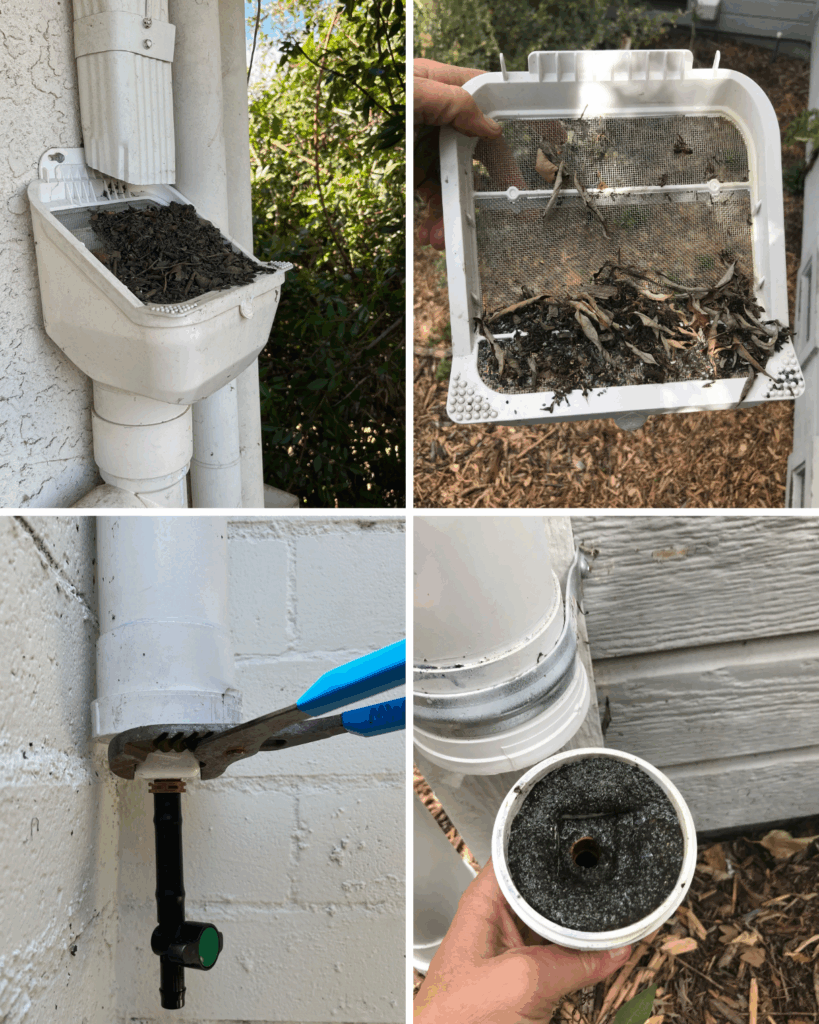
Brush off any debris on your filter screens. If needed, remove the screens and rinse them in a bucket or scrub them with a wire brush. If you have a first-flush diverter, open it up, clean out the gunk, and put it back together with Teflon tape so it seals well.
Check your first-flush drain valve.
Make sure the drain valve is closed or just barely open if you have a small drain tube leading to a plant or garden area. If it’s just barely open, the first flush will drain itself after the rain stops. If you leave it closed, remember to empty it after the rain by fully opening the valve.
Double-check your tank valves.
The main valve or hose bib at the bottom of your tank should be closed so you don’t lose incoming rainwater.
- If you have multiple tanks that are meant to fill together, make sure the valves between them are open.
- If your tanks are at different heights and fill separately, keep those valves closed so the lower tank doesn’t overflow too early.
Make sure your overflow can do its job.
Clear your overflow screen if you have one and check that your pop-up emitter is in place (if you have one). When your tank fills up, the extra water needs a safe path away from your home.
Prepare for big storms if you have a small tank.
If a major storm is coming and your overflow design is insufficient to adequately move water away from your house, neighboring properties, or anywhere where flooding can become a problem, here are some things you can do:
- You can fully open the shutoff valve on your first-flush and direct first-flush tubing away from your foundation to a place where it can flow away safely.
- If that’s not enough, open your hose bib and run a hose to a good drainage spot or storm drain.
- For very heavy rain, you can open the bottom of your first-flush altogether and attach a temporary 3-inch drainpipe to run water safely away from any potential flood zones.
Turn off your irrigation system.
This is just a general good practice for water conservation. If you don’t have a weather sensor on your irrigation controller, manually turn off irrigation systems.
For help getting your rainwater tank ready for the rainy season, please fill out our online Maintenance Request form or email us at sales@catchingh2o.com.
To learn more about rainwater harvesting, we highly recommend reading Brad Lancaster’s work at harvestingrainwater.com.