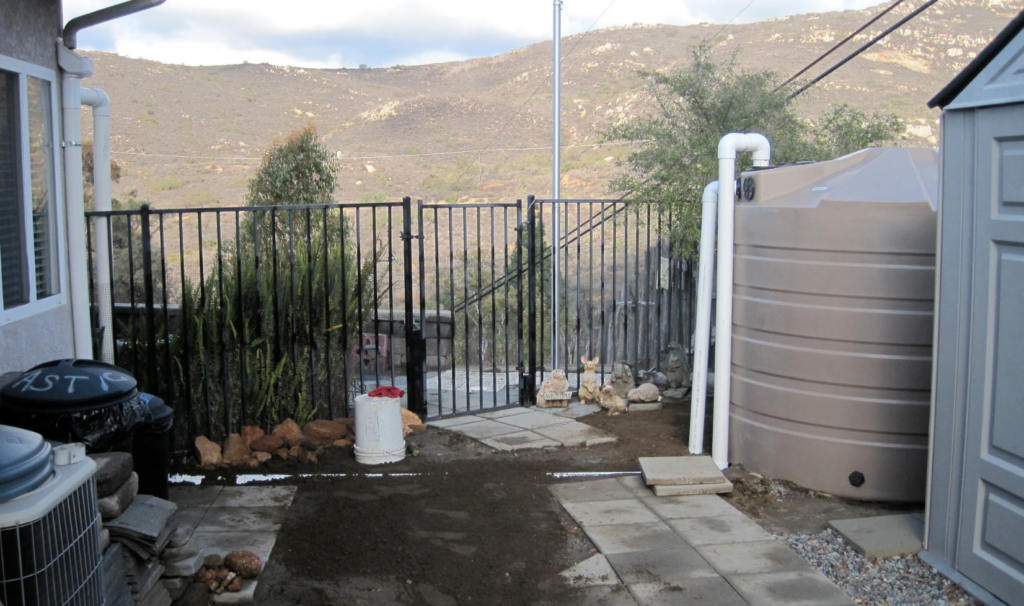
As wildfire preparedness becomes an increasingly important part of landscape and home design in Southern California, homeowners are paying closer attention to Zone Zero—the area immediately surrounding a structure where reducing potential ignition sources can help protect a home during a wildfire.
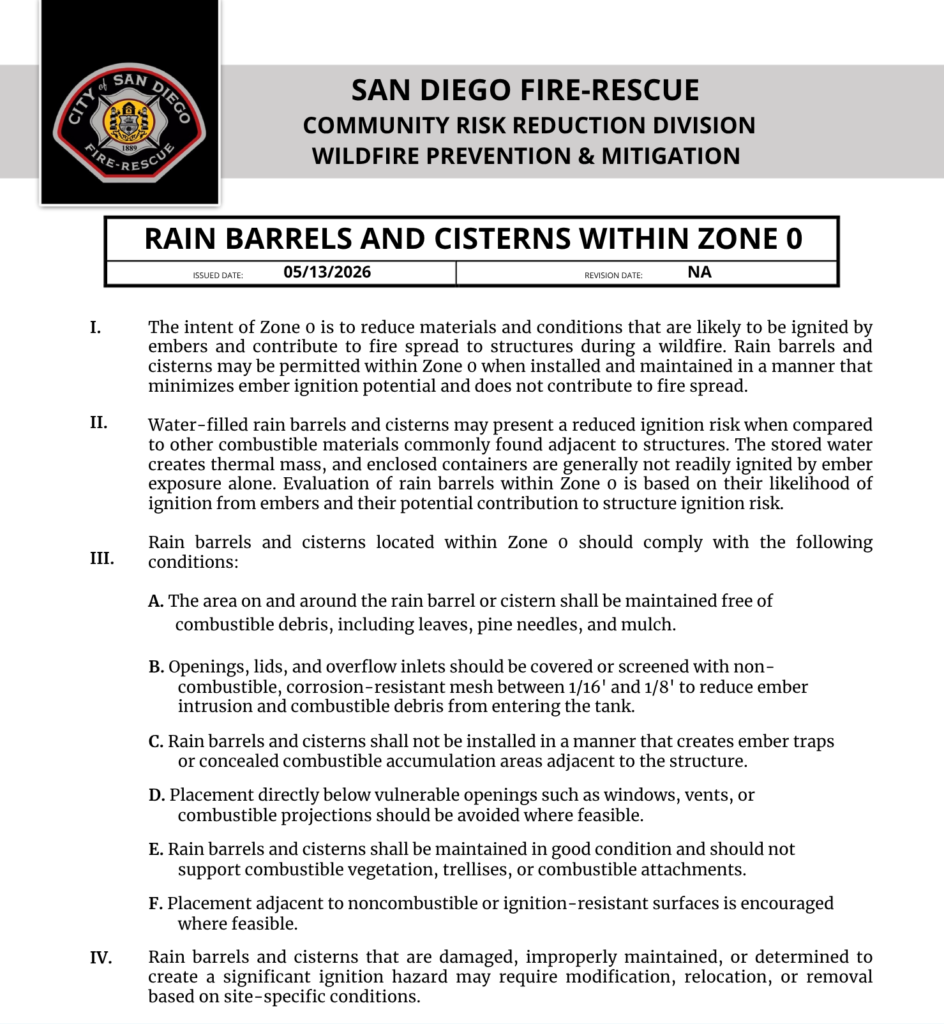
One question we hear is whether rain barrels and cisterns can be installed within Zone Zero. According to the City of San Diego Fire-Rescue’s Community Risk Reduction Division, they can. Rain barrels and cisterns may be located within Zone Zero when they are installed and properly maintained in a way that minimizes ember ignition potential and does not contribute to fire spread.
See the City of San Diego’s statement below for the complete guidance.
What Makes a Rain Tank Appropriate for Zone Zero?
Water-filled, enclosed rain tanks are generally less susceptible to ignition from embers than many of the combustible materials commonly found around homes. The key is reducing the potential for embers to ignite materials around the tank or enter the system.
Rain barrels and cisterns located within Zone Zero should be:
Kept clear of combustible debris. Remove leaves, pine needles, mulch, and dry vegetation from around the tank. A clean area makes the system safer and easier to maintain.
Properly screened. Openings, lids, and overflow inlets should be covered or screened with 1/16–1/8-inch noncombustible, corrosion-resistant mesh to help keep embers and combustible debris out.
Designed to avoid ember traps. Tanks, platforms, and plumbing should not create concealed spaces where leaves or other combustible materials can accumulate.
Placed thoughtfully. Where feasible, avoid positioning tanks directly beneath vulnerable windows, vents, or combustible projections. Placing tanks near noncombustible or ignition-resistant surfaces is encouraged.
Maintained regularly. Tanks should be kept in good condition and free of combustible vegetation, trellises, or other attachments that could increase fire risk.
Good Design Makes a Difference
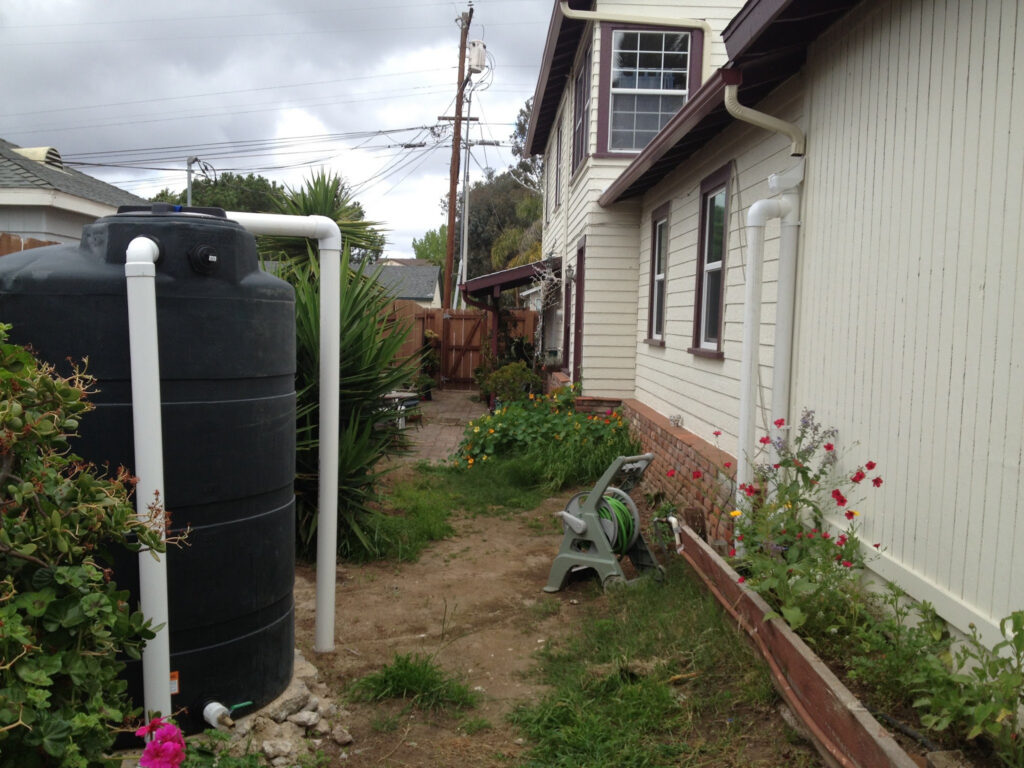
Zone Zero isn’t necessarily about removing everything around a home. It’s about thoughtfully reducing conditions that could allow embers to ignite materials and spread fire to a structure.
This is where good rainwater harvesting design can make a difference. A tank should be considered as part of the entire system—including its platform, plumbing, overflow, surrounding landscape, and relationship to the home. Proper placement can help the system function efficiently while minimizing potential fire hazards.
Regular maintenance is equally important. A damaged or poorly maintained tank, or one surrounded by accumulated debris, may create a greater ignition concern and could require modification or relocation depending on site-specific conditions.
Water Resilience + Wildfire Preparedness
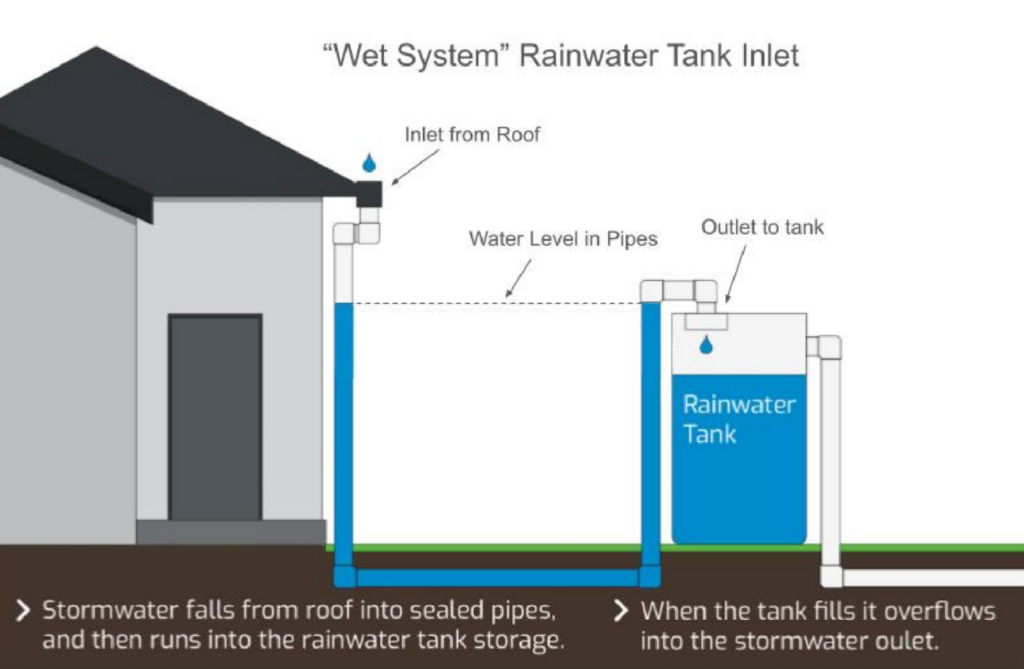
At CatchingH2O, we believe resilience comes from designing systems that address multiple challenges at once. Rainwater harvesting can help conserve water, reduce stormwater runoff, and support healthy landscapes—and, when thoughtfully designed, it can also fit within a fire-conscious landscape.
There is growing support for rainwater harvesting across the region. The City and County of San Diego are actively encouraging rainwater collection through voucher and rebate programs, making it more affordable for homeowners to install rain tanks and increase local water storage. These programs reflect a broader shift toward practical, property-level solutions that help communities become more water resilient.
Water resilience and wildfire preparedness don’t have to be competing goals. With careful planning, a rain tank can be both a valuable water resource and a responsible part of a Zone Zero landscape.
Because Zone Zero requirements can vary by jurisdiction and property, always check current local regulations and requirements before installing a tank near a structure.
Need Help With Your Rainwater System?
Whether you’re planning a new rain tank, updating an existing system, or want to make sure your current setup is properly maintained for Zone Zero, CatchingH2O can help. Our team can evaluate your property, identify opportunities to improve your system, and recommend practical solutions that support both water resilience and wildfire preparedness. Contact us to schedule a consultation or maintenance visit.