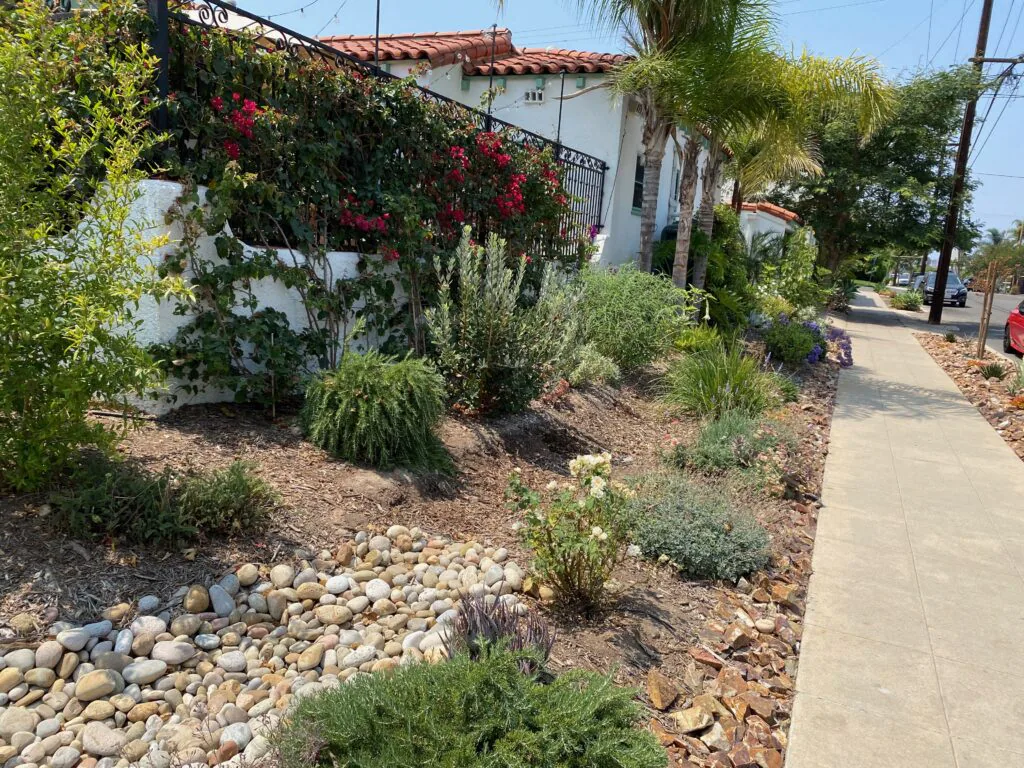
A properly maintained greywater system is a powerful tool for conserving water and supporting a thriving landscape. While these systems are designed to be low-maintenance, they do require periodic care to ensure efficient performance and to prevent clogs, pooling, or uneven distribution.
This guide outlines the basic maintenance tasks, troubleshooting steps, and best practices that will help keep your system operating efficiently.
Understanding the Basics
Greywater systems reuse water from sources such as washing machines, showers, and sinks to irrigate plants through a network of pipes, valves, emitters, and mulch basins. Because greywater contains lint, soap residue, and organic matter, buildup can occur over time. Routine inspections and maintenance are essential to keep water flowing properly.
Preventative Best Practices
To reduce maintenance needs and extend the life of your system:
- Use greywater-friendly, biodegradable detergents.
- Avoid overloading your washing machine, which can increase lint buildup.
- Inspect your system regularly instead of waiting for problems to appear.
- Keep mulch fresh and ensure basins are appropriately sized.
Start With Your Maintenance Manual
The first step in maintaining your CatchingH2O greywater system is to review your maintenance manual. Familiarizing yourself with the system components and layout will make routine maintenance much easier and more effective.
Every greywater system is slightly different depending on site conditions and design. If you are ever unsure about a component or notice something unusual, contact CatchingH2O for assistance.
Routine Maintenance Tasks
For most simple Laundry to Landscape systems or gravity shower greywater systems, routine maintenance should include the following at least once a year. These tasks are true of both Laundry Greywater Systems and Shower Greywater Systems, however, this blog covers Laundry Greywater systems in more detail.
- Confirm the valve position
- Flush the system
- Inspect water distribution
- Check mulch basins
- Observe plant health
Greywater/Sewer Switching
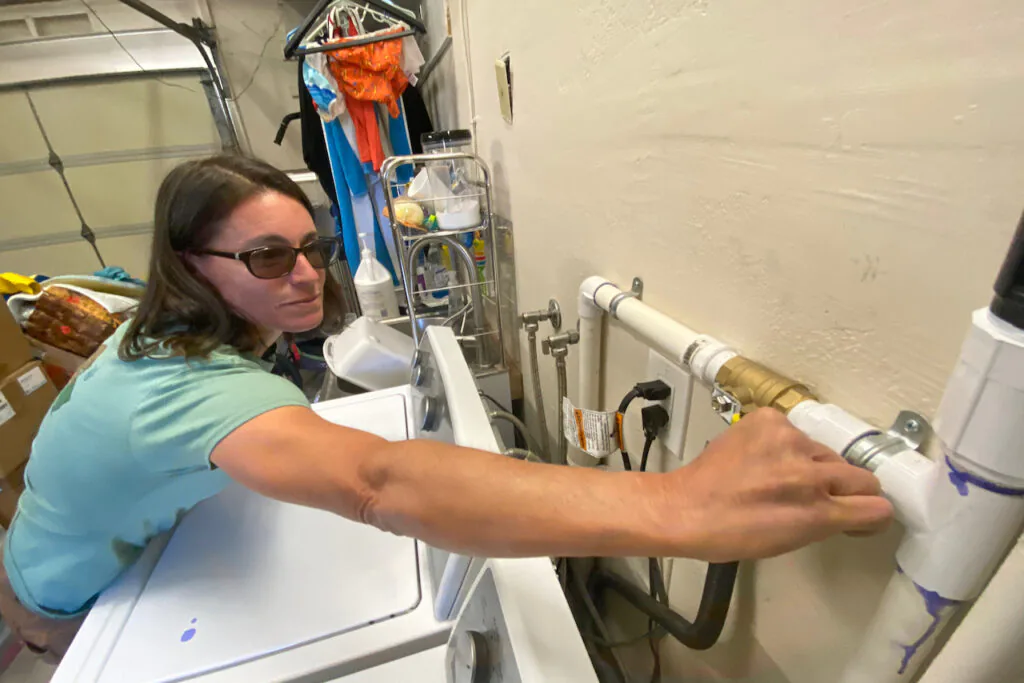
Make sure your 3-way valve is set correctly for greywater to check your greywater system. If you are unsure, refer to your maintenance manual or send us a photo for guidance.
Periodically make sure that your 3-way valve works correctly and that the water diverts either to the sewer/septic or to greywater as appropriate.
Periodic System Flushing
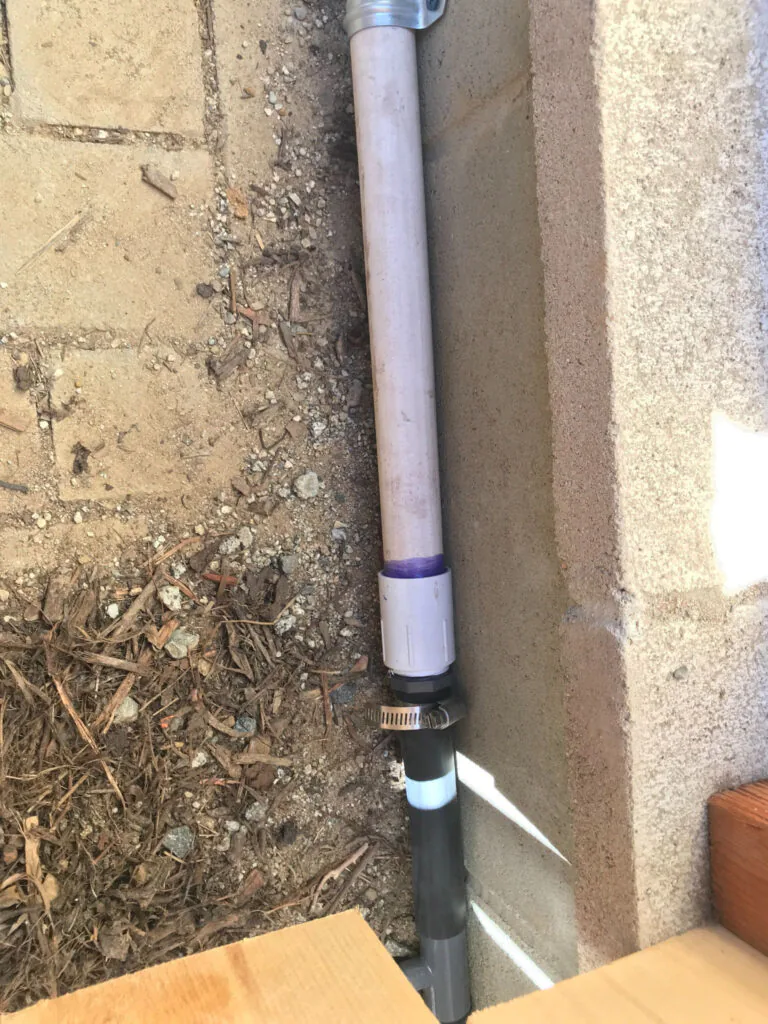
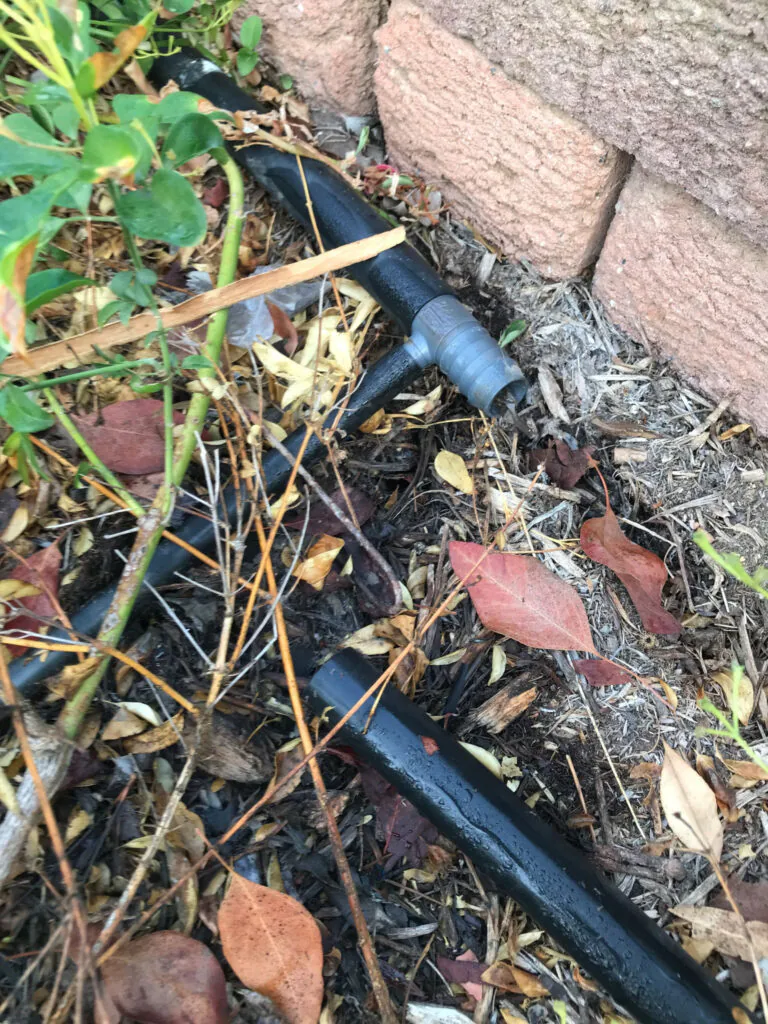 Over time, lint and residue can accumulate inside the pipes and eventually cause clogs. Flushing the system periodically helps prevent these issues.
In a Laundry to Landscape System, there is a specific point where the solid PVC pipe transitions to poly tube. This is an easy place to pull the poly tube off a barbed fitting and flush the poly line with a hose. You can also do this at each tee if they are accessible.
Maintaining Emitters
Clean emitters are essential for proper water distribution. Blocked emitters can reduce irrigation performance and create backpressure in systems that use pumps.
Branched Drain outlets are open-ended 1.5-inch or 2-inch pipes that carry water from showers and sinks to landscape basins. These emitters are typically located inside valve boxes to protect them from surrounding mulch.
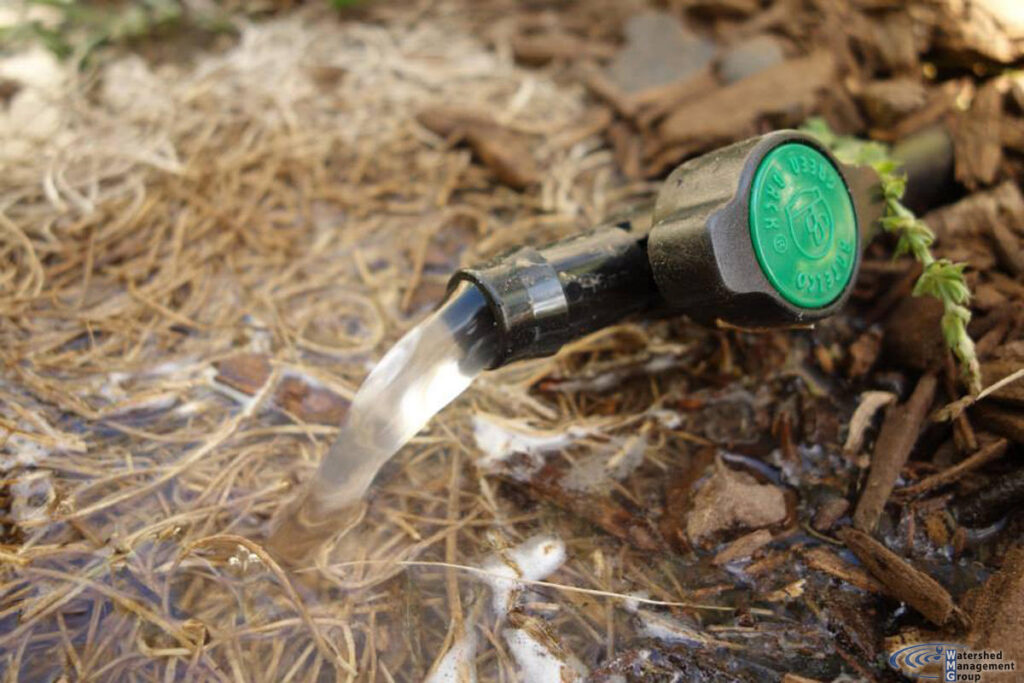
Laundry to Landscape Emitters are 1/2-inch, 3/4-inch, or 1-inch in diameter and terminate at a shutoff valve. These valves allow you to adjust water flow to different areas of the landscape. The emitters are generally located beneath valve box covers and may become clogged by debris or root intrusion.
In maintaining your greywater system, inspect your emitters regularly. Pull all the lids off your emitter covers so you can see the emitters. Clear away any debris. Check for clogs or root intrusion. Ensure water flows appropriately from distribution points.
If you find a clog, remove the affected tee or fitting and flush it with a hose. A length of wire or a sturdy stick can also help clear debris from the line. For branched drain systems, you may use a plumbing snake.
Adjusting Water Distribution
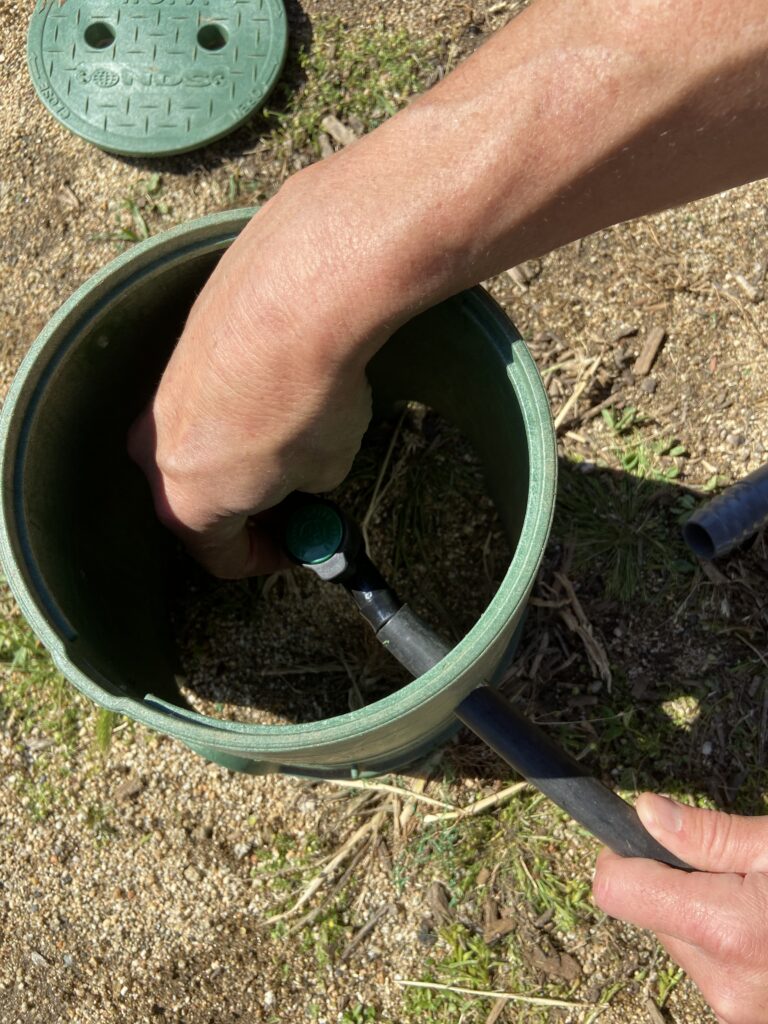
Evaluating how water is distributed throughout your landscape can help you determine whether each area is receiving the appropriate amount.
Some systems are designed for equal flow from all emitters, while others intentionally direct more water to specific areas.
For example, a planting area at the top of a slope may require the emitter valve to remain fully open, while an emitter at the bottom of the slope may need to be nearly closed. Because water naturally continues downhill through the line, lower emitters often receive more water unless they are adjusted.
Maintaining Mulch Basins
Mulch basins allow greywater to soak into the soil while supporting beneficial microorganisms that break down organic material and help fertilize your plants. Over time, mulch basins can become compacted or root-bound, preventing water from infiltrating properly.
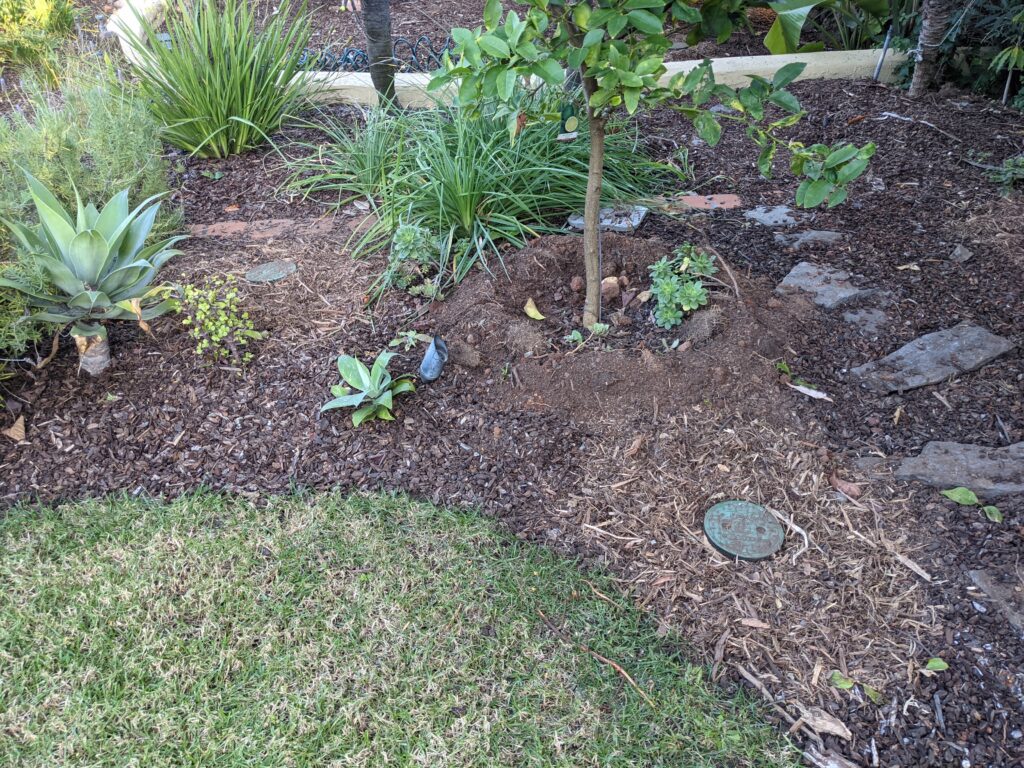 Routine maintenance of mulch basins includes checking basins for pooling or runoff, replenishing mulch as it decomposes, and/or reshaping basins to maintain proper size and capacity.
If you notice pooling, dig out the basin to the appropriate size and refill with fresh material. Place larger wood chips or trimmings at the bottom, then add 2 to 4 inches of mulch on top. You can reuse the old, decomposed mulch elsewhere in your landscape as compost.
Observe Plant Health
In the first year or two of your greywater system, you should pay close attention to plants. Some may not yet have their roots touching the greywater and may need additional water until the roots find the greywater.
After the first year, you will see where some plants are thriving and tapped into greywater or other plants are struggling and may not be tapped in, and you may consider making adjustments to plant locations, basin areas, or water distribution accordingly.
If you notice one or more plants suddenly appearing stressed, check to make sure the greywater is reaching the area as intended.
Troubleshooting Common Problems
Issue: Washing Machine Will Not Drain
If your washing machine does not drain, turn the 3-way valve to the sewer position. When the machine drains normally in the sewer position, there is likely a clog somewhere in the greywater line. However, if the washing machine still does not drain, the problem may be with the washing machine itself.
Issue: Clogged Greywater Line
When troubleshooting a clog,
- Locate the point where the PVC pipe connects to the poly tubing.
- Disconnect the poly tubing from the barbed fitting.
- Flush the poly line with a garden hose.
- With the poly line still disconnected, run a load of laundry and check whether water flows freely through the PVC line.
If the PVC line is clogged, you have two options for flushing.
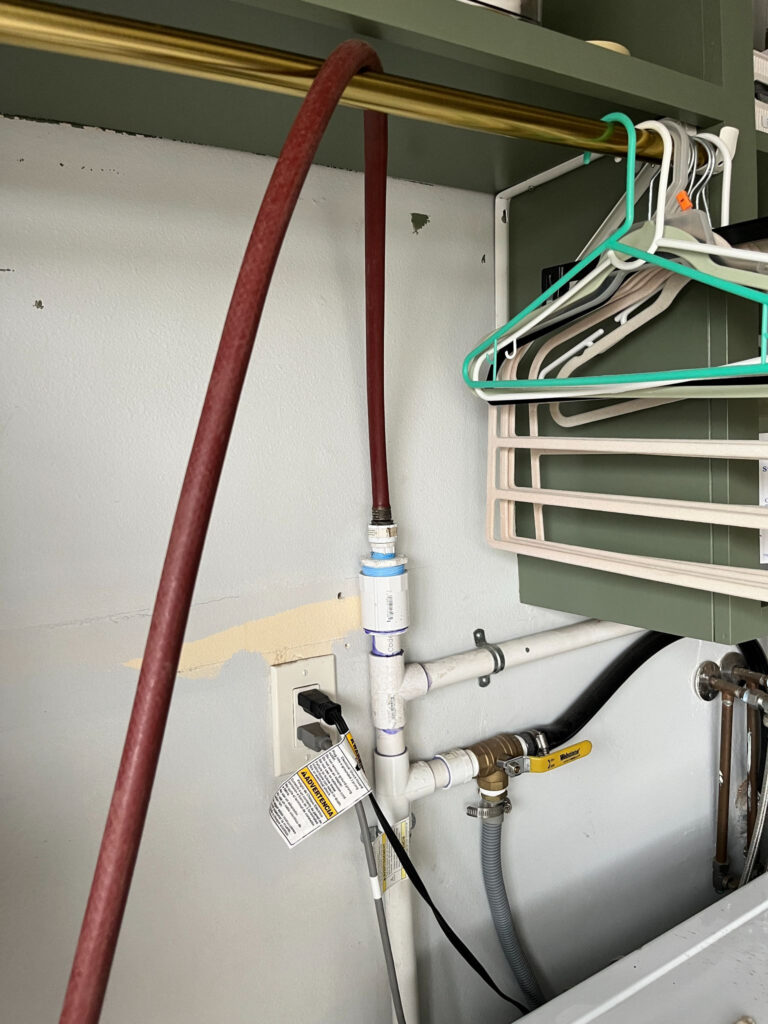 Option 1 (Left): Flush Through the Vent Connection. Start by turning the 3-way valve to the sewer position so water cannot backflow into the washing machine. Remove the Studor vent. Run water through the PVC line from the vent opening to the disconnected section outside. To prevent splashing in the laundry area, you can create a tight hose connection using a 1.5-inch male adapter with a 1.5-inch by 3/4-inch bushing and a 3/4-inch PVC hose-thread fitting. Contact CatchingH2O if you need more detailed instructions.
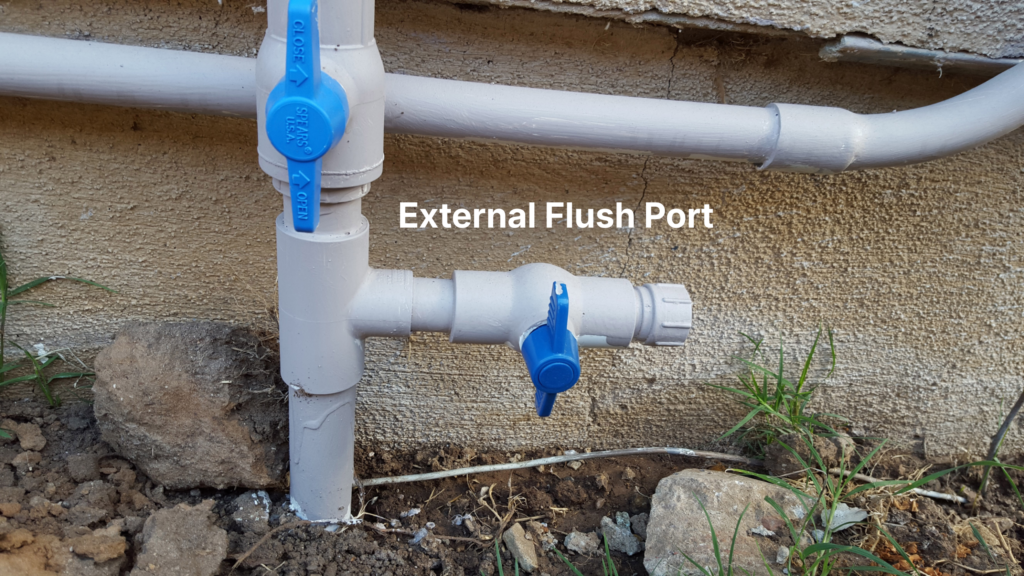 Option 2 (Right): Install an Exterior Flush Port. Another option is to install a flush port where the PVC line exits the house. This involves cutting and gluing a tee with a shutoff valve in the direction of the washing machine and on the new junction of the tee so you can isolate running water out to the yard through a hose. Then add a hose connection so pressurized water can be sent through the system. An exterior flush port can make future maintenance much easier.
Issue: Unpleasant Odors In the Landscape
If you notice odors around your mulch basins, it is probably because water is not soaking in appropriately. This may be a signal to remove existing decomposed and compacted or root bound mulch and add fresh mulch to your basin.
Consider whether your water use has changed. Additional laundry loads, houseguests, or seasonal changes may produce more greywater than the system was designed to handle. In this case, you may want to add additional basins or enlarge existing basins.
Review your maintenance manual to confirm the number of loads your system is intended to support. If necessary, test the soil percolation rate and recalculate the loading capacity of the basin.
Issue: Plants Are Dying or Wilting
If, after your greywater system has been in place for more than a year, you notice that some plants suddenly begin to struggle, check that water is flowing as expected when you run a load of laundry or take a shower. This may indicate a clog, or it could signal a broken line farther upstream that is preventing water from reaching the area.
Pumped Systems: Additional Maintenance Not Addressed in This Blog
Greywater systems that include pumps require additional maintenance and are often more specific to the system design. Maintenance may include:
- Replacing filters
- Testing make-up and flush water systems
- Inspecting the index valve
- Testing the greywater pump
- Verifying that float switches are functioning correctly
Refer to your maintenance manual for the recommended maintenance schedule for these components.
When to Contact CatchingH2O
 If you have questions at any point during themaintenance process, we are here to help. Your maintenance manual is the best first reference, but if you need additional assistance, you can contact CatchingH2O directly.
You may also submit a Maintenance Request through our website if you would like our team to inspect or service your system.
Final Thoughts
A greywater system is an investment in water conservation and long-term landscape health. It connects you with the immediate resource cycles of your household, since now your indoor routines impact your ultra local ecology. With regular maintenance and attentiveness—including periodic flushing, emitter cleaning, mulch basin care, and occasional adjustments—you can prevent most common issues before they become major problems.
A small amount of routine attention will keep your system operating efficiently and help ensure that it continues to conserve water and support a healthy landscape for years to come.