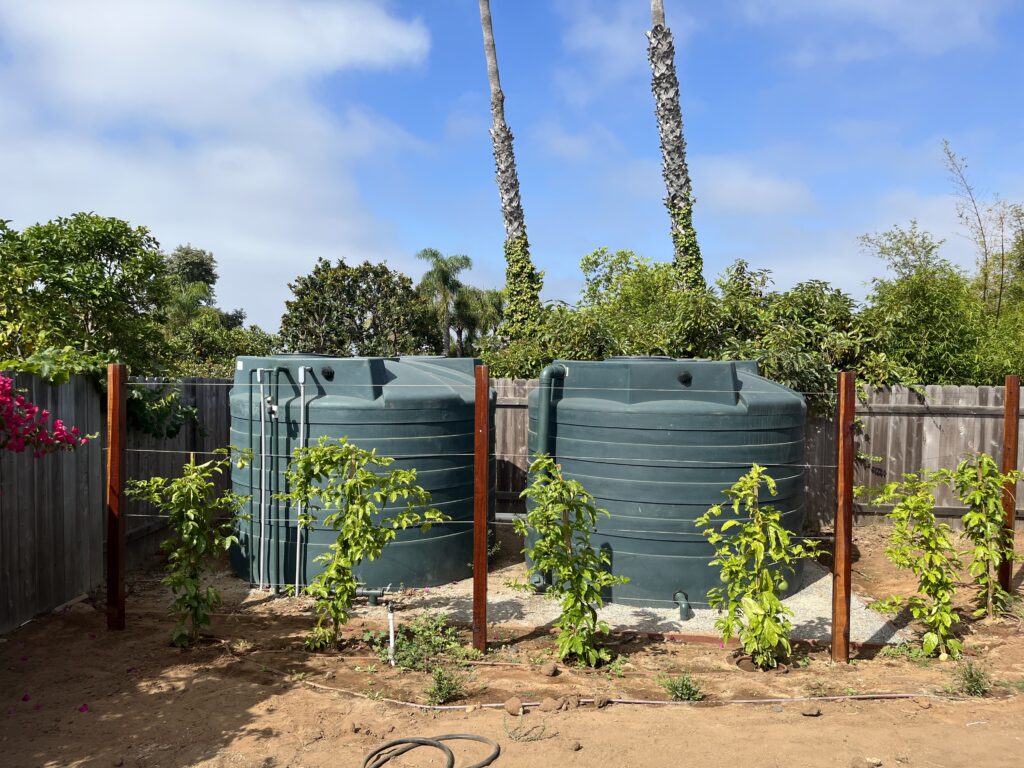
As San Diego enters its annual rainy season, El Niño is also strengthening in the tropical Pacific. El Niño can influence winter weather patterns and increase the likelihood of wetter conditions in Southern California, but it cannot tell us exactly how much rain San Diego will receive.
Regardless of how the season unfolds, preparing early can help your rainwater harvesting system capture more water and safely manage overflow when storms do arrive.
Don’t wait until rain is already in the forecast. Use this checklist to make sure your system is ready before the rainy season arrives.
Clear your gutters and downspouts
Leaves, branches, sediment, and other debris can obstruct the path between your roof and tank. Clear your gutters and downspouts so rainwater can move freely through the system. If you cannot safely access your roof or gutters, hire a qualified professional.
Clean your filters
Remove accumulated debris from your filter screens. Depending on your system, screens may be brushed clean, removed and rinsed in a bucket, or gently scrubbed with a wire brush.
Check that screens are intact and seated securely. Damaged or poorly fitted screens can restrict flow or allow leaves, insects, and other debris into the tank.
Clean and reset your first-flush diverter
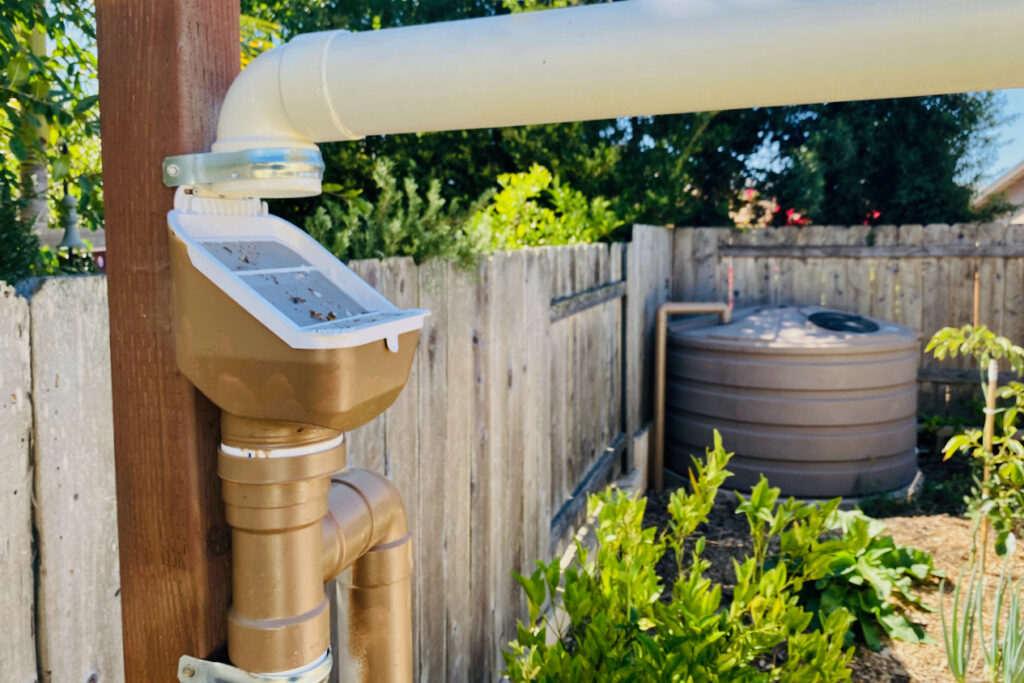
A first-flush diverter keeps the initial runoff from your roof (which may contain dust, pollen, droppings, and other debris) out of your tank.
Open and clean the diverter, then reassemble it carefully. Check seals, fittings, and threaded connections for leaks. If needed, use Teflon tape to help fittings close securely.
Double-check your valves and connections
Before the rain begins, confirm that the main valve or hose bib at the bottom of the tank is closed so you do not lose incoming water.
- If you have multiple tanks that are meant to fill together, make sure the valves between them are open.
- If your tanks are at different heights and fill separately, keep those valves closed so the lower tank doesn’t overflow too early.
Because systems vary, consult your Catching H2O Maintenance Manual if you are unsure how your valves should be positioned.
Make sure your overflow has a clear, safe path
Even a relatively short storm can fill a smaller tank quickly. Once the tank reaches capacity, every additional gallon must leave through the overflow.
Clear the overflow screen and inspect the pipe for blockages, damage, or loose connections. If your system includes a pop-up emitter, confirm that it is in place and can open freely.
Follow the overflow route through your landscape. Water should move away from buildings, neighboring properties, septic systems, and areas vulnerable to erosion or flooding. Make sure the discharge point has not become buried by soil, mulch, roots, or plant growth.
If you are uncertain whether your overflow can safely handle a large storm, have the system evaluated before the rainy season. Do not wait until the tank is overflowing to discover a drainage problem.
Create capacity and plan for overflow
If a major storm is coming and your overflow design is insufficient to adequately move water away from your house, neighboring properties, or anywhere where flooding can become a problem, here are some things you can do:
- Fully open the shutoff valve on your first-flush system and direct the tubing away from your foundation to a location where the water can flow safely.
- If additional drainage is needed, open the tank’s hose bib and run a hose to a suitable drainage area.
- For very heavy rain, a temporary larger drainpipe may be needed to direct water away from potential flood zones.
Avoid releasing large amounts of water onto saturated soil, steep slopes, or areas where it could flow toward buildings or neighboring properties. If you are unsure how to safely manage excess water, contact Catching H2O before the storm arrives.
Turn off your irrigation
Rain is free irrigation. If your controller does not have a functioning rain or weather sensor, pause the irrigation schedule before a storm. Remember to reassess soil moisture afterward rather than automatically returning to the previous schedule.
Monitor the forecast & inspect again after the rain
Follow local forecasts, watches, and warnings through the National Weather Service San Diego and sign up for local emergency notifications.
Once conditions are safe after a storm, walk through the system again. Look for clogged screens, leaking fittings, standing water, erosion, displaced pipes, or overflow that traveled somewhere unexpected. Empty the first-flush chamber if necessary and address small problems before the next storm arrives.
Prepare now, not when the clouds arrive
El Niño does not tell us exactly how much rain San Diego will receive or where the strongest storms will occur. It does give us a good reason to prepare early.
A clean, well-maintained rainwater harvesting system can capture more water, reduce avoidable runoff, and direct excess water more safely when the tank reaches capacity.
For help preparing your rainwater tank for the rainy season, complete our Maintenance Request form or email maintenance@catchingh2o.com.
To learn more about rainwater harvesting, we also recommend Brad Lancaster’s resources at harvestingrainwater.com.